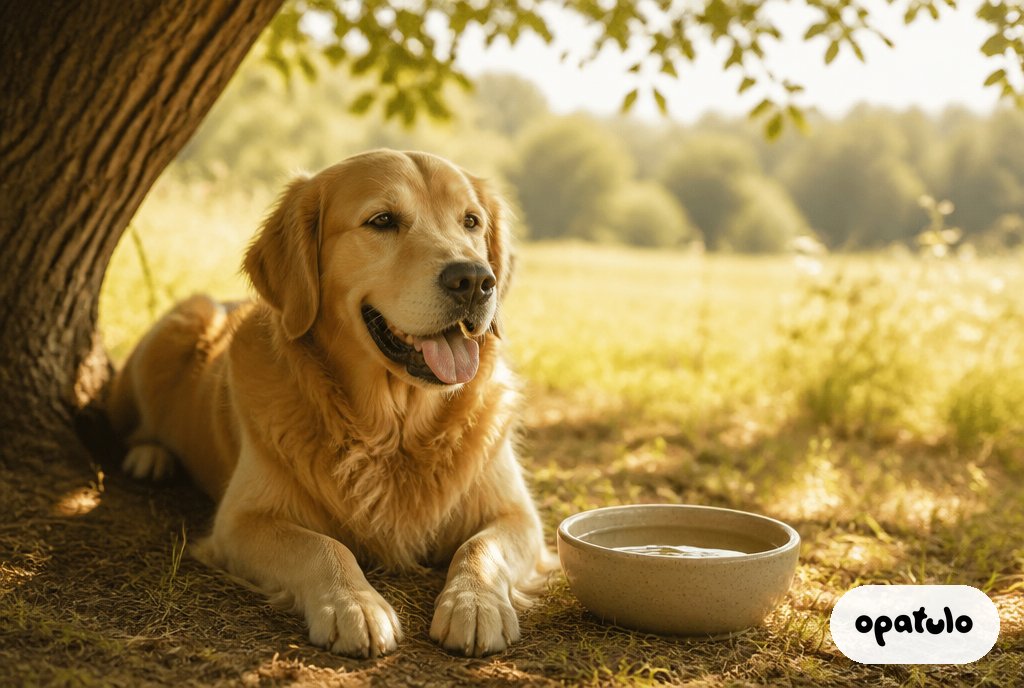
Do one thing today before you take your dog for a walk: put your hand on the asphalt and hold it there for 7 seconds. Can't do it? Then your dog can't either – except they have no shoes and no way of telling you.
Late July, over thirty degrees outside, and clinics everywhere are going through the same seasonal drama: overheating. Every year it looks the same – a caregiver who loves their dog more than life, one bad decision made in good faith, and a race against time. This article exists so that you start that race earlier than most. Or never have to start it at all.
Why a dog overheats faster than you
You sweat with your whole body – sweat evaporates and cools your skin. Dogs practically do not have that system. Their sweat glands are mostly in their paw pads, and almost all of their cooling happens through panting: exchanging hot air for cooler air through the tongue and airways.
And here is the catch: panting works as long as the air around is cooler than the dog. In a hot car, on scorching concrete, in full sun with no shade – that mechanism simply stops working. Your dog is not "being dramatic". Your dog physically has nothing left to cool itself with.
So remember the rule that sounds brutal but saves lives: if you are hot, your dog is hotter.
Who is in the risk group (i.e. who the heat hurts twice as much)
- flat-faced breeds (pugs, French and English bulldogs, boxers, Pekingese) – their airways are so shortened that panting barely cools at all,
- seniors and puppies,
- overweight dogs,
- dogs with thick or dark coats,
- dogs with heart or airway conditions.
If your dog is on this list, every rule in this article applies to them in the strict version – less, shorter, earlier in the morning.
Three traps even the best caregivers fall into
Trap 1: "I'll just leave him in the car for a moment." There is no "moment". On a hot day the temperature in a parked car rises by well over ten degrees within minutes – slightly open windows change almost nothing. A dog locked in a car can die within fifteen minutes. If you see someone else's dog locked in a hot car – call the emergency number.
Trap 2: the usual walk – just at noon. Asphalt in the sun heats up to around 60°C – a temperature at which paw pads literally burn. Hence the 7-second test from the beginning of this article. In a heatwave, walks move to early morning and late evening; in the middle of the day – only a short toilet break, ideally on grass and in the shade.
Trap 3: "but he loves fetching so much". He does. And he will fetch enthusiastically right up until he collapses, because dogs have no "enough" sensor. In the heat, you are that sensor: no intense play, no running next to the bike, no training during the day.
What overheating looks like: from "something is off" to a life-threatening emergency
Overheating does not fall out of the sky – it builds up. In the early phase it can be stopped with simple measures, which is why catching the early signals matters so much.
Early phase (react immediately):
- panting far more intense than usual that rest does not calm down,
- thick saliva, drooling,
- strongly red gums and tongue,
- restlessness or the opposite – sudden slowing down, seeking shade, lying down on the ground.
Advanced phase (this is heatstroke – a life-threatening emergency):
- very fast, shallow breathing,
- dark red or even bluish gums,
- wobbly gait, disorientation,
- vomiting, diarrhoea,
- seizures, loss of consciousness.
First aid: the 5 minutes that matter
- Stop everything immediately and move the dog into the shade – ideally somewhere airy, or into a cool room.
- Cool with water – cool, but NOT ice-cold. Ice-cold water abruptly constricts blood vessels and, instead of helping, puts extra strain on the circulation. Pour water or apply wet towels where the skin is thin: belly, groin, armpits, paws. Running lukewarm water (a shower, a garden hose) – even better.
- Increase the airflow – a fan, the car's air vents, a draught. Evaporation plus moving air is the most effective cooling duo.
- Offer small amounts of water to drink. Do not force it – a semi-conscious dog can choke.
- Go to the vet. Always. Even if your dog seems better. Heatstroke can damage internal organs and the clotting system with a delay: the dog looks fine in the evening and the crisis starts at night. A check-up after overheating is not overcaution – it is the standard.
Call the clinic on the way and let them know you are coming – the team will be ready for you.
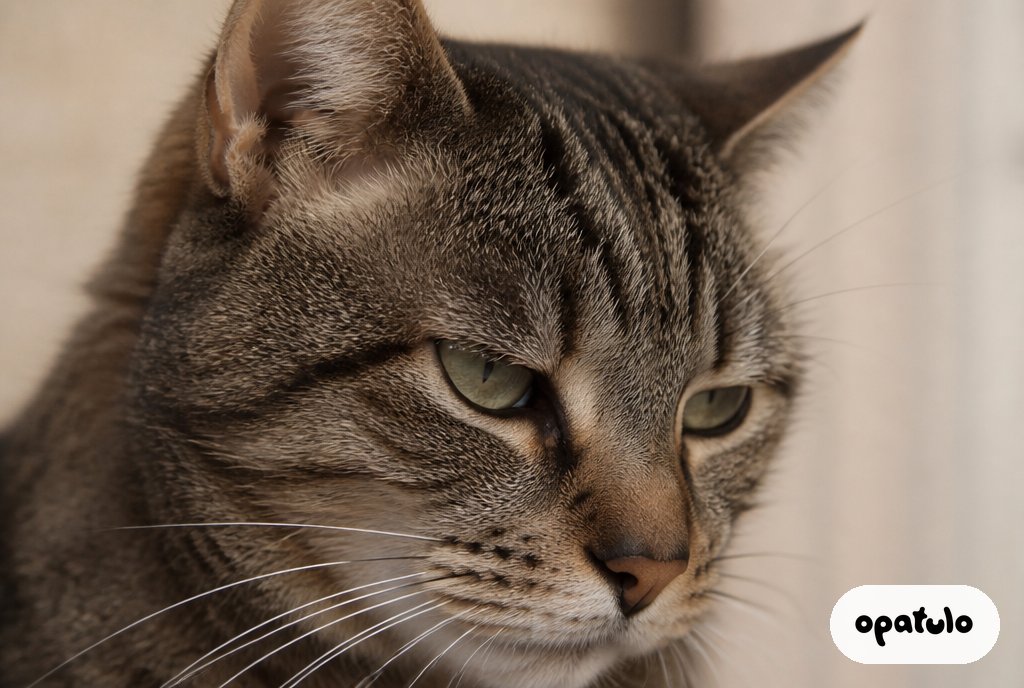
And cats? A word about the quiet dramas behind the curtain
Cats cope with heat somewhat better than dogs, but summer has its own trap for them – and it is not the one you think.
The tilted window. You air the flat, the cat tries to squeeze out through the gap of a tilted window, gets wedged at belly height – and hangs there. The pressure on the abdomen cuts off the blood supply to the back of the body; a dozen or so minutes is enough for it to end in paralysed hind legs or the cat passing away. Vets have a name for it: tilted-window syndrome. The rule is simple – a cat is never left alone in a room with a tilted window. Window nets or special grilles for tilted windows cost very little and close the subject.
Beyond that: fresh water in several places (cats drink little and reluctantly – in the heat this takes its revenge), access to cool bathroom tiles and peace. The cat will find the coolest tile in the flat by itself – it has a talent for that.
Fridge cheat sheet
The most important heatwave rules on one page – print it and stick it on the fridge.
- Prevention: walks in the morning and evening · the 7-second asphalt test · water and shade always available · no intense exercise during the day · a dog NEVER stays in the car · a cat NEVER stays alone with a tilted window.
- Early signs of overheating: unusually intense panting · drooling · red gums · seeking shade → shade, cool water on the belly and paws, airflow.
- Heatstroke (life-threatening): shallow fast breathing · bluish gums · wobbling · vomiting · seizures → you cool AND you DRIVE TO THE VET. Even if they improve – you go.
This guide was written at Opatulo. We are finishing work on an online pet first aid course – the kind after which, in a situation like the one above, you act on autopilot instead of searching with shaking hands.
Learn about the course